Our History
A Historic Maine Meetinghouse
Celebrating 200 Years of Faith and Community
The West Brooksville Congregational Church was organized on January 4, 1826. In its earliest years, the congregation gathered in a nearby schoolhouse that also served as the town house: a shared home for worship, education, and the civic life of the young community.
By the early 1850s, the congregation was ready to build a meetinghouse of its own. At a meeting on July 22, 1854, members voted unanimously to proceed and appointed a building committee. Work on the frame began on May 3, 1855, and the church was completed that summer. The new meetinghouse was dedicated on November 30, 1855. Its recorded cost was $2,250, not including the bell.
Church records credit North Castine master builder Jesse Gardner with supervising construction and Blue Hill carpenter Thomas M. Lord with the interior work. Historical evidence suggests that Lord may also have played a larger role in the building’s design. Whatever the exact division of their work, the finished church became a graceful local expression of the Greek Revival style found in nineteenth-century Maine.
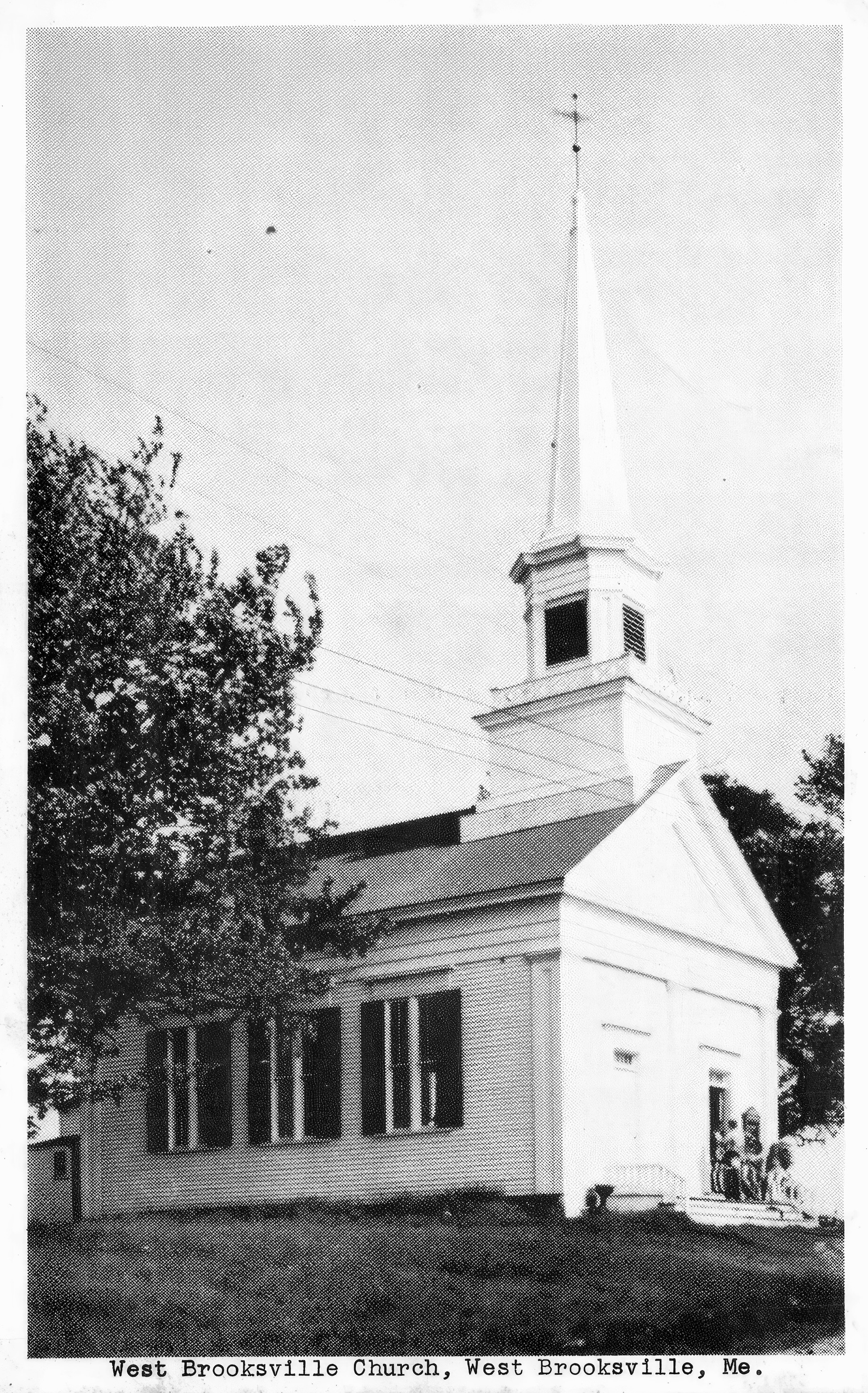
The meetinghouse rests on a granite foundation and retains its balanced two-entrance façade, broad triangular pediment, three-stage tower, octagonal belfry, and slender spire. Inside, original pews remain alongside molded window surrounds decorated with carved rosettes and vines. A vestry was added in 1898, carefully echoing the character of the earlier building.
In 1982, a fire destroyed part of the nave floor and caused heat and water damage throughout the interior. The congregation restored the church, preserving both its historic fabric and its continuing purpose as a house of worship.
The building was added to the National Register of Historic Places on June 20, 1995, in recognition of its architectural significance.
Today, two centuries after its congregation first gathered, the historic meetinghouse still stands. Its white clapboard exterior, balanced design, graceful steeple, and carefully preserved interior details make it a beautiful example of nineteenth-century Maine architecture.
More than a landmark, it is a living church. It has remained in continuous service longer than any other church in Brooksville and continues to be an active house of faith, fellowship, service, and community life.
Listed on the National Register of Historic Places